
Loud explosions lit up the skies over Tel Aviv and Jerusalem on Sunday night as Iran launched a wave of missiles at Israel, marking a dangerous escalation in the ongoing tensions between the two adversaries.
MISSILES TARGET ISRAEL’S MAJOR CITIES
The missile assault came just hours after the United States carried out precision airstrikes that reportedly destroyed key Iranian nuclear facilities. The attacks targeted critical sites in Isfahan, Fordow, and Natanz, described as the core of Tehran’s nuclear program.
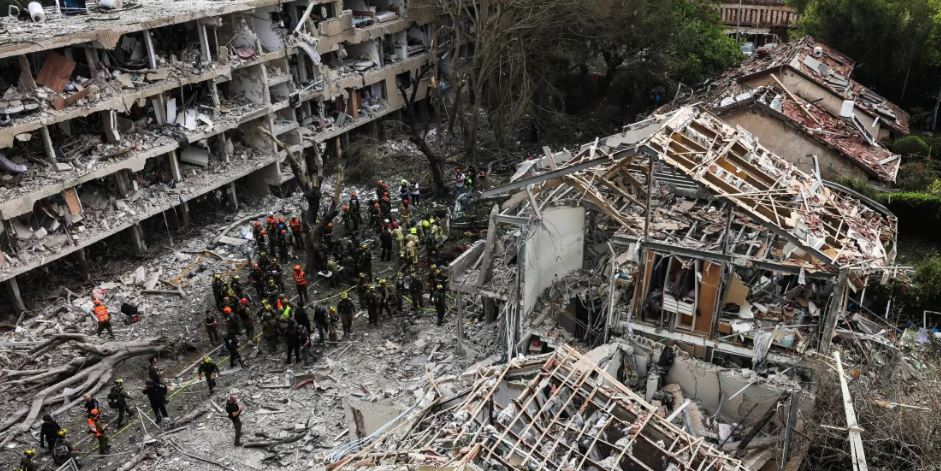
Air-raid sirens blared across Israeli cities, including Tel Aviv and Jerusalem, as residents scrambled for safety. Israel’s military swiftly activated its advanced air-defense systems, intercepting many of the incoming missiles. However, fragments from a downed missile near Haifa caused panic and injuries, prompting emergency services to respond immediately.
Initial reports from Israeli medical services confirmed at least 20 injuries across affected areas, with the southern city of Beersheba also coming under attack.
ESCALATION IN A LONG-STANDING CONFLICT
This latest exchange of hostilities underscores the volatile nature of the long-standing conflict between Iran and Israel. The two nations have been locked in a shadow war fueled by Iran’s nuclear ambitions and Israel’s determination, supported by the United States, to prevent Tehran from acquiring nuclear weapons.
Sunday’s missile strikes mark a significant escalation in the conflict, which has already claimed 25 lives and resulted in over 50 confirmed missile impacts on Israeli soil since fighting intensified on June 13.
GLOBAL IMPLICATIONS OF THE CRISIS
Iran, in a defiant statement, warned of “everlasting consequences” for the U.S.-led attacks on its nuclear facilities. Tehran’s leaders condemned the strikes as an act of aggression, vowing to retaliate against both the U.S. and Israel.
Despite the high-stakes military actions, Iran’s National Nuclear Safety System and the International Atomic Energy Agency (IAEA) confirmed that radiation levels in the region remain within safe limits.
REGIONAL STABILITY AT RISK
As tensions escalate, fears are growing of a broader conflict engulfing the Middle East. Analysts warn that the current situation could spiral into a regional war, drawing in major global powers and destabilizing an already fragile region.
The international community is closely monitoring developments, with calls for de-escalation growing louder. However, as Israel and Iran continue to exchange blows, the path to peace remains uncertain.