
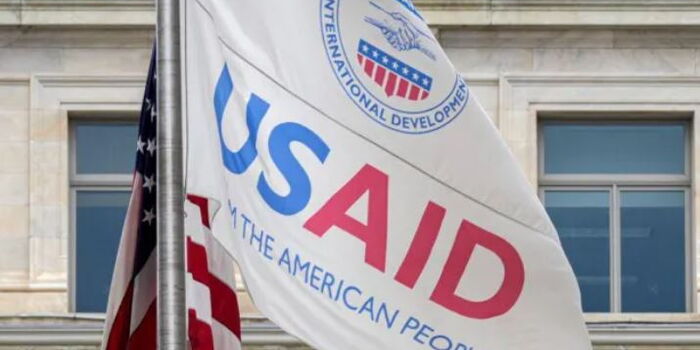
The recent decision by the United States Agency for International Development (USAID) to issue termination letters to key implementing partners has sparked significant reactions within Kenya. This move, aligned with a broader foreign aid freeze, threatens critical sectors, including healthcare, and has ignited calls for greater national self-reliance.
Wetang’ula: A Wake-Up Call for Kenya
Speaking during the funeral service of Baringo Senator William Cheptumo, National Assembly Speaker Moses Wetang’ula backed the decision by the U.S. to prioritize domestic interests, terming it a necessary wake-up call for African nations.
“This decision should motivate us to adopt self-sufficient strategies. America is focusing on making itself great again. We must ensure that Kenya is great forever by making sacrifices and working hard,” Wetang’ula asserted.
He emphasized the importance of homegrown solutions to mitigate the effects of the funding freeze, particularly in sectors heavily reliant on donor aid, such as healthcare.
Mudavadi: Strengthening Kenya’s Economic Resilience
Prime Cabinet Secretary Musalia Mudavadi echoed similar sentiments, highlighting the government’s proactive approach to addressing the potential fallout.
“We are exploring diplomatic channels to soften the impact of the aid suspension. However, this underscores the urgency of building a resilient economy that is not dependent on the goodwill of foreign nations,” Mudavadi stated.
Impact on Kenya’s Healthcare Sector
The USAID funding freeze has raised concerns about the availability of life-saving medical supplies, including antiretroviral drugs (ARVs), condoms, and other essentials. Many donor-supported health initiatives and programs now face significant challenges, including potential layoffs and service disruptions.
Among the affected programs is the USAID Tujenge Jamii initiative, a collaboration involving USAID, Deloitte, FHI 360, and Goldstar. Termination letters sent to various implementing partners signal the scaling down of critical health interventions.
The Vulnerability of Donor Dependency
The situation has reignited discussions about Kenya’s reliance on donor funding, particularly for essential services. Leaders across the political spectrum are calling for a shift towards greater independence in managing national programs.
“Kenya must use this as an opportunity to create long-term solutions. Dependency on foreign aid is not sustainable,” emphasized Wetang’ula.
Call to Action
As the country grapples with the implications of the aid freeze, there is a growing consensus on the need for bold, transformative measures to safeguard critical sectors. Both Wetang’ula and Mudavadi have called for a renewed focus on self-reliance and sustainable development to ensure Kenya’s resilience in the face of external challenges.

