
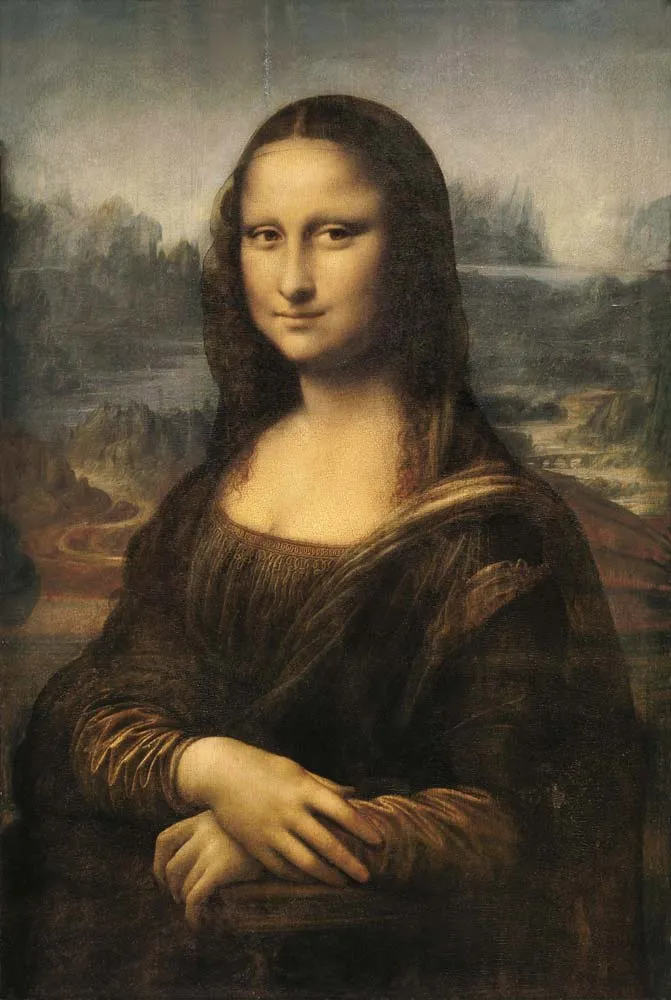
The Mona Lisa—an enigmatic portrait that has captivated the world for over 500 years. Painted by the Renaissance genius Leonardo da Vinci, this small yet powerful artwork has become a global icon, inspiring countless debates, theories, and even heists. But what makes the Mona Lisa so extraordinary? Let’s unravel the secrets behind the world’s most famous painting.
The Genius Behind the Brush: Leonardo da Vinci
Leonardo da Vinci (1452–1519), an artist, scientist, inventor, and true Renaissance man, painted the Mona Lisa between 1503 and 1506. Known for his mastery of technique and unquenchable curiosity, Leonardo was obsessed with capturing the subtleties of human emotion and form. His revolutionary techniques, including sfumato (a smoky blending of colors and tones), brought his subjects to life in ways no artist had achieved before.
For Leonardo, the Mona Lisa was more than just a portrait—it was an obsession. He carried the painting with him for years, constantly refining it, until his death in 1519.
Who Is the Woman Behind the Smile?
The identity of the Mona Lisa’s sitter has been a topic of endless speculation. The most widely accepted theory is that she is Lisa Gherardini, a Florentine woman and wife of wealthy merchant Francesco del Giocondo. This explains the Italian name for the painting, La Gioconda.
Lisa was likely chosen as a subject to commemorate a special event, such as the purchase of their new home or the birth of a child. But her modest life contrasts sharply with the global fame her portrait achieved.
Why Is the Mona Lisa So Famous?
- The Mystique of Her Smile: The Mona Lisa’s smile is its most talked-about feature. Depending on the viewer’s angle, her expression seems to shift—sometimes serene, sometimes teasing, sometimes inscrutable. This illusion is the result of Leonardo’s expert use of sfumato.
- The Theft That Made Headlines: In 1911, an Italian handyman named Vincenzo Peruggia stole the painting from the Louvre, claiming he wanted to return it to Italy. The theft made global headlines, and the painting became a household name. When it was recovered two years later, it was hailed as a national treasure, elevating its status further.
- Endless Parodies and Pop Culture References: From Dali’s surrealist takes to Andy Warhol’s pop art renditions, the Mona Lisa has been reimagined countless times, cementing its place in modern culture.
- Its Home at the Louvre: Today, the Mona Lisa resides in the Louvre Museum in Paris, where it attracts millions of visitors annually. Displayed in a climate-controlled, bulletproof glass case, it is the museum’s crown jewel.
How Much Is the Mona Lisa Worth?
While the Mona Lisa is priceless in artistic and cultural value, experts estimate its monetary worth at over $1 billion. In 1962, it was insured for $100 million, the highest valuation of any painting at the time. Adjusted for inflation, that’s close to $1 billion today.
But let’s be clear—the Mona Lisa is not for sale. Its value transcends money, symbolizing artistic genius, mystery, and the enduring allure of human emotion.
The Painting’s Journey
- 1503–1519: Painted and refined by Leonardo.
- 1519: Acquired by King Francis I of France after Leonardo’s death.
- 1797: Placed in the Louvre following the French Revolution.
- 1911: Stolen and later recovered.
- 2025: Still mesmerizing millions in the Louvre.
The Eternal Question: Why Does She Matter?
The Mona Lisa is more than a painting; it’s a dialogue across centuries. It embodies the intersection of art, science, and human curiosity. It invites us to wonder about the woman behind the smile, the artist’s intentions, and the many stories the painting has witnessed over its remarkable journey.
Whether you’re an art enthusiast or a casual admirer, standing before the Mona Lisa in the Louvre is a moment that transcends time—a reminder of humanity’s ability to create something truly eternal.
So, what will you see in her smile?