Kenyan authorities have come under intense scrutiny after reportedly blocking the public screening of a hard-hitting BBC documentary that investigates the fatal police shootings of protesters during the anti-Finance Bill demonstrations in 2024.
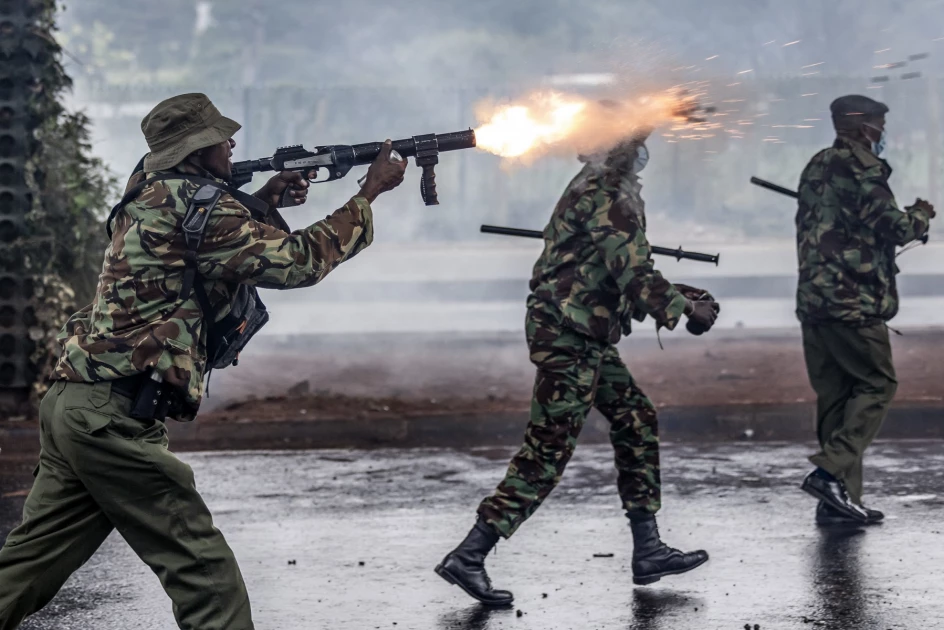
The documentary, titled “Blood Parliament,” produced by BBC Africa Eye, was scheduled for a premiere and panel discussion at Unseen Nairobi cinema on Monday evening. However, according to a statement from the BBC, the event was cancelled due to “pressure from the authorities.”
“We are deeply disappointed that we couldn’t proceed with the screening and public dialogue as planned,” a BBC spokesperson said. “The documentary remains available on BBC Africa’s YouTube channel.”
Documentary Exposes Police Impunity During 2024 Protests
The film documents a harrowing account of state-sanctioned violence during the youth-led protests in June and July 2024. Sparked by the controversial Finance Bill 2024, the demonstrations saw thousands of young Kenyans—dubbed Gen-Z protesters—take to the streets in Nairobi and across the country.
At least 60 people were killed in the crackdown, yet no official report on police accountability has been made public nearly a year later.
The BBC investigation, which garnered over 2 million YouTube views within 24 hours, analyzes more than 5,000 images and videos to reconstruct the events of June 25, 2024, when some of the most violent clashes occurred outside Kenya’s Parliament buildings.
The documentary identifies police officers allegedly responsible for the killings of David Chege (39), Erickson Mutisya (25), and Eric Shieni (27)—a University of Nairobi student who was fatally shot in the head while fleeing the scene.
A Central Police Station officer, Job Kaboi, is shown on video coordinating with colleagues moments before the shootings. A masked officer is believed to have pulled the trigger on Chege and Mutisya. Meanwhile, a Kenya Defence Forces (KDF) officer is accused of killing Shieni.
IPOA Responds Amid Growing Pressure for Justice
The Independent Policing Oversight Authority (IPOA) confirmed on Monday that it has completed investigations into 22 of the 60 reported deaths, while 36 cases remain under active review. Two cases are in court, while others have been either internally closed or are awaiting decisions from the Office of the Director of Public Prosecutions (ODPP).
IPOA Chair Issack Hassan revealed that the agency documented 233 injury cases, but cited “a lack of cooperation from both police personnel and witnesses” as a key barrier to progress.
Interior Cabinet Secretary Kipchumba Murkomen is expected to issue a formal response, with the public and human rights groups demanding greater transparency and accountability.
Public Outcry Over Censorship and Police Brutality
The government’s alleged interference with the documentary screening has triggered widespread criticism from civil society and online users who view it as an attempt to suppress truth and silence dissent.
“Censoring a film that highlights extrajudicial killings is a direct attack on press freedom and justice,” said one Nairobi-based human rights advocate.
As pressure mounts, legal experts and activists are calling for an independent commission of inquiry and the prosecution of officers involved in the killings.