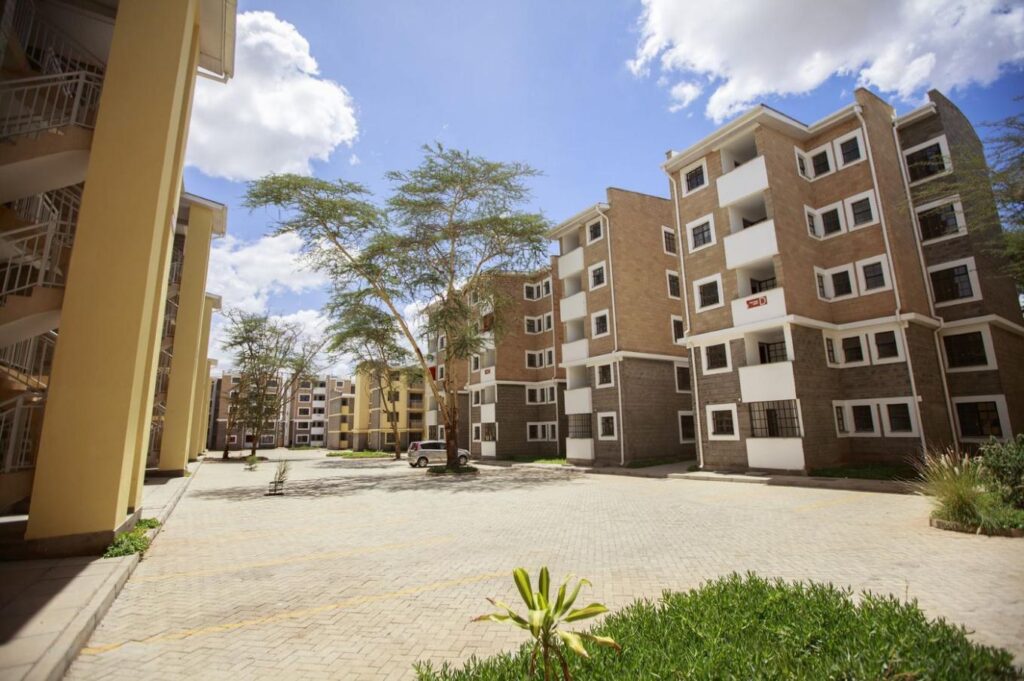
Kenya’s Affordable Housing Programme, introduced with the promise of uplifting millions from informal settlements to modern housing, has encountered significant challenges. Reports suggest that many beneficiaries are selling their subsidized homes and returning to slums. Experts and residents alike have provided insights into this phenomenon, revealing the deeper socio-economic issues at play.
Economic Priorities Over Homeownership
According to Twaweza East Africa’s Sauti za Wananchi (SzW) survey, housing ranks low among the priorities of Kenya’s urban poor. Only 4% of respondents identified housing as their primary concern, while 36% emphasized jobs, 28% focused on healthcare, and 16% prioritized education.
For many residents of informal settlements, daily necessities like food, school fees, and medicine far outweigh the appeal of owning a home. As a Mukuru resident reportedly commented, “The house is beautiful, but it doesn’t feed my children. In the slum, my customers are nearby.”
Hidden Costs and Accessibility Issues
While subsidized housing offers modern living spaces, it also introduces hidden costs such as service charges, utility bills, and mortgage payments. For families living on less than KSh 300 a day, these expenses are insurmountable.
The Kenya National Bureau of Statistics (KNBS) noted in its 2019 Census that over 56% of Nairobi residents live in informal settlements. For these individuals, proximity to work and trade is critical. However, the KNBS 2023 Urban Mobility Survey revealed that 68% of low-income workers in Nairobi walk to work. Relocation to distant housing units often means unaffordable transportation costs, further discouraging residents from embracing these developments.
Challenges for Informal Livelihoods
The design of affordable housing complexes often restricts informal businesses such as food vending and tailoring, which many slum dwellers rely on for survival. As one resident from Mathare questioned, “If I can’t afford medicine or school fees, what good is a house?”
Systemic Shortcomings
Dr. James Ciera, Twaweza Kenya’s country lead, has pointed out that the lack of public involvement in the Affordable Housing Programme’s design has contributed to its inefficacy. Protests against the controversial 1.5% salary deduction to fund the program further underscore public discontent.
UN-Habitat’s World Cities Report 2022 also warns that affordable housing initiatives fail when livelihoods are not prioritized. Residents of informal settlements depend heavily on social networks for childcare, job referrals, and other support. Displacement disrupts these networks, compounding their struggles.
The Path Forward: Integrating Housing with Livelihoods
Experts, including Dr. Ciera, advocate for a shift in strategy. Rather than prioritizing ownership, the government should focus on upgrading existing slums by improving sanitation, infrastructure, healthcare, and education without displacing communities.
The UN-Habitat’s Cities Without Slums initiative supports such approaches, enabling residents to improve their living conditions while preserving their communities.
New developments should be planned near workplaces, schools, and markets to integrate housing with livelihoods effectively. Policymakers must actively engage with citizens to design solutions tailored to their needs. As a World Bank governance brief notes, “Policies succeed when citizens own them.”
A Broader Perspective
While housing is essential, it must be part of a comprehensive approach that includes addressing food security, education, and healthcare. Without tackling these broader challenges, subsidized homes will either remain unoccupied or be sold off, perpetuating the cycle of poverty.
A Mathare resident participating in a UN-Habitat study summarized it best: “We need jobs first. Then we can build our own homes with dignity.”
Kenya’s vision for affordable housing can succeed if grounded in reality, empathy, and the voices of its people. By integrating housing initiatives with sustainable livelihoods, the government can transform its housing dream into a lasting solution.