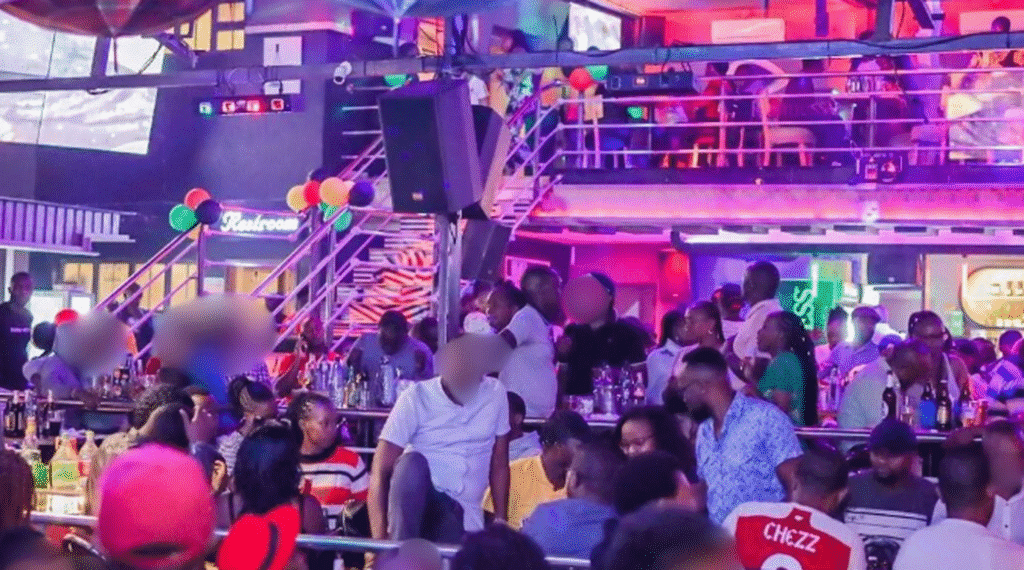
Nairobi’s nightlife has undergone a dramatic evolution — from the days of Florida 2000 and small pubs in the 1990s to today’s mega clubs and lounges in residential estates. What was once a Central Business District (CBD) phenomenon has now spilled into neighbourhoods, reshaping entertainment while sparking new conflicts.
On Monday, September 22, the National Environment Management Authority (NEMA) released a fresh crackdown list of 107 entertainment joints facing closure over noise pollution. The public notice followed a surge of complaints from residents frustrated by loud music and late-night activity near their homes.
But this raises important questions: how did Nairobi nightlife move into estates, and why does it continue clashing with authorities and residents?
From Florida 2000 to the rise of Nairobi’s entertainment hub
In the 1980s and 1990s, iconic clubs like Florida 2000 defined Nairobi’s nightlife, with legendary DJs such as Adrian setting the tone. At the time, entertainment was concentrated in the CBD. Estate pubs and local joints were quieter, offering conversation, politics, and camaraderie rather than booming speakers.
Back then, football fever and the English Premier League had not yet transformed weekend nights. Nairobi nights were simpler, contained, and centred in the city’s commercial core.
The shift: Demand, money, and digital promotion
By the early 2000s, Nairobi was expanding rapidly. Population growth, rising incomes, and globalisation fueled demand for bigger, flashier clubs.
The internet revolution changed how Nairobians discovered hotspots. Where posters and radio once ruled, social media marketing made it easier for clubs to reach thousands instantly. The nightlife industry exploded — introducing themed lounges, LED dance floors, and international-standard experiences.
When nightlife left the CBD and entered estates
One of the biggest shifts came when clubs began setting up in residential areas such as Kilimani, Kileleshwa, Roysambu, and along Thika Road.
Improved infrastructure, especially the Thika Superhighway, made local access easier. Revellers no longer needed to drive across town, and club owners tapped into ready markets near estates.
But what boosted convenience also sowed conflict. Loud music, traffic congestion, and late-night activities disrupted family life and sleep, fuelling neighbourhood backlash.
The blessing and curse of Nairobi nightlife
The nightlife industry today is a powerful economic engine. It creates thousands of jobs — from DJs, artists, and waitstaff to security, transport, and suppliers. It also boosts creativity and puts Nairobi on the map as a global entertainment hub.
Yet the costs are equally clear: sleepless nights for residents, increased insecurity, noise pollution, and congestion.
This tension explains why NEMA crackdowns are frequent — even though enforcement often appears inconsistent, with some establishments using political connections to stay afloat.
Why the battles won’t end soon
Nairobi is positioning itself as a global city, and nightlife is central to its identity. For residents, however, the demand is simple: peace, quiet, and security.
Unless regulators, club owners, and communities find middle ground, the tug-of-war between entertainment and residents will only intensify.