
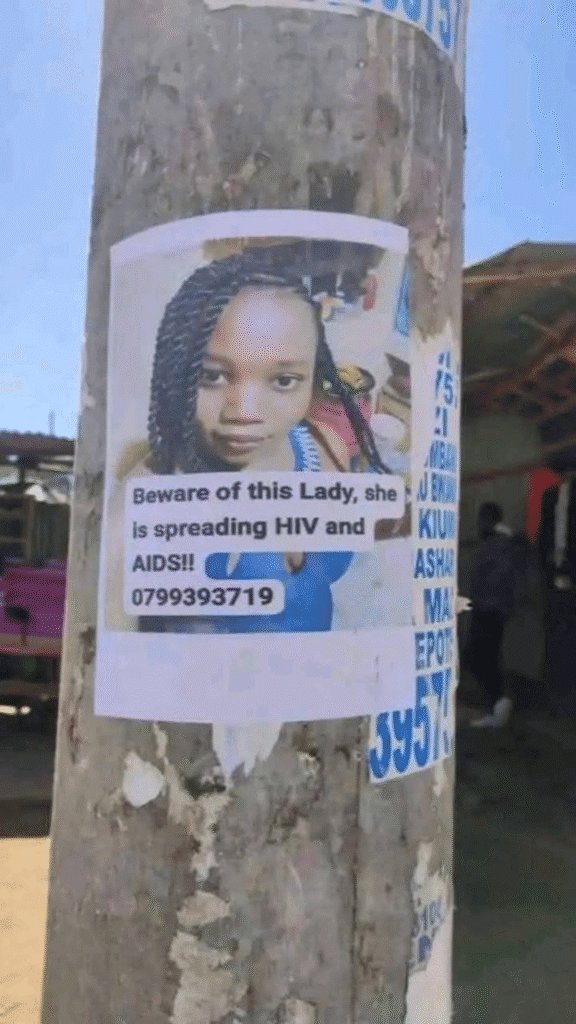
Friday, August 29, 2025 — Kenya: Residents and online users have been left shocked after the photo of a young woman, described as “beautiful and vibrant,” was found pinned to a busy street pole. The photo was accompanied by a disturbing warning, accusing her of allegedly spreading HIV.
The notice, crudely printed and displayed in public, included the woman’s phone number alongside the accusations. This reckless exposure not only violated her privacy but also subjected her to public ridicule, stigma, and possible harassment.
A COMMUNITY DIVIDED: REVENGE OR DEFAMATION?
The incident has triggered heated debate both offline and on social media platforms. Some Kenyans speculated that the act may have been orchestrated by a jilted lover seeking revenge, using the public notice as a weapon to tarnish the woman’s image.
Others, however, believe that she may be a victim of malicious defamation, with the poster being part of a larger trend of cyberbullying and offline harassment targeting women.
One online user commented:
“This is beyond cruel. If it’s true, let authorities handle it. If it’s false, then her life has been destroyed over lies.”
THE DANGERS OF HIV STIGMA AND MISINFORMATION
Public health experts warn that such actions perpetuate HIV stigma and misinformation. The reality is that HIV is a manageable condition with modern treatment, and weaponizing it as a tool of shame not only endangers victims of defamation but also discourages people from seeking testing, counseling, and treatment.
Health advocates stress that anyone spreading rumors about another person’s HIV status without medical evidence is committing a serious violation of human rights.
LEGAL & SOCIAL IMPLICATIONS
Kenya’s Computer Misuse and Cybercrimes Act criminalizes the publication of false, malicious, or defamatory information online and offline. If proven to be an act of revenge or defamation, the culprit could face heavy fines, jail terms, or both.
Furthermore, exposing personal phone numbers publicly can put individuals at risk of harassment, threats, and violence. Women, in particular, are frequent victims of such public shaming tactics.