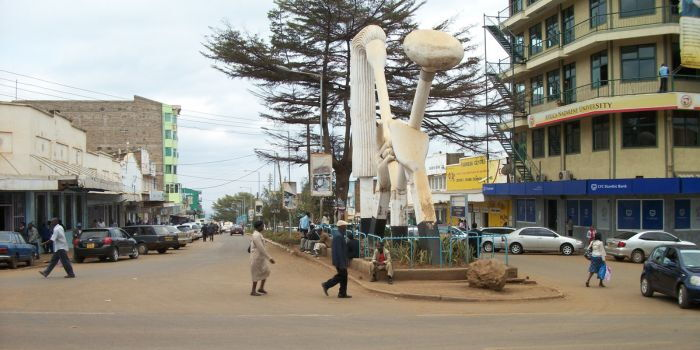
Meru Town, one of Kenya’s most vibrant and fast-growing urban centers, holds a unique historical nickname known mainly to locals: Mutindwa. While many Nairobi residents associate “Mutindwa” with a busy Eastlands market, in Eastern Kenya, the term is synonymous with Meru Town, the economic and administrative capital of Meru County.
So, why do locals call Meru Town ‘Mutindwa’? The answer lies deep in colonial history, community memory, and the cultural legacy of a British District Commissioner who left a lasting mark.
📜 THE ORIGIN OF ‘MUTINDWA JWA KANGANGI’
The term Mutindwa loosely translates to “the place where people linger all day” or “a gathering ground.” For decades, residents from Meru, Tharaka Nithi, and the larger Eastern Kenya region have used this name informally to refer to the town.
Its full historical version is “Mutindwa jwa Kangangi,” referring to the nickname of the first British District Commissioner in Meru, Sir Edward Butler Horne. Known as “Kangangi,” meaning “the small wanderer,” Horne earned this title due to his short stature and relentless travel across the Meru district during his service from 1908 to 1918.
🏛️ THE FOUNDING OF MERU TOWN IN 1911
Meru Town was officially founded on May 13, 1911, when Horne designated one square mile of land as an official British township. This marked the birth of Meru’s urban identity, complete with a Union Jack flag post.
In 1917, Horne commissioned the first permanent building in the area—what is now the Meru National Museum. Initially serving as a British administrative office, the structure was made of stone and mud walls with a wooden floor and remains a heritage symbol of colonial Meru to this day.
By 1971, Meru was upgraded into a municipality, making it the only town outside Kenya’s provincial capitals to receive such status, with an expanded jurisdiction of 207 square kilometers.
🏙️ PRESENT-DAY MERU: ECONOMIC AND EDUCATIONAL POWERHOUSE
Today, Meru Town stands tall as the county headquarters of Meru County, which had over 1.5 million residents according to the 2019 Kenya Population Census.
Strategically located on the northeastern slopes of Mount Kenya, Meru has become a major financial and agricultural hub, boasting:
- 22 commercial bank branches
- A Central Bank of Kenya Currency Centre serving Northern Kenya
- One of East Africa’s largest produce markets: Gakoromone Market
🎓 A REGIONAL CENTRE OF EDUCATIONAL EXCELLENCE
Meru has also evolved into a top-tier educational centre in Eastern Kenya. It is home to prominent institutions such as:
- Meru University of Science and Technology (MUST)
- Kenya Methodist University (KeMU – Main Campus)
- Mount Kenya University (Meru Campus)
- Kenya Medical Training College (KMTC – Meru Campus)
- Kaaga Girls, Kaaga Boys, and Meru School (National Schools)
The town also hosts technical training colleges like Nkabune, Meru Technical, and academic centres of the University of Nairobi, Kenya Institute of Management, and Africa Nazarene University.
🌍 MUTINDWA: A NAME THAT REFLECTS HISTORY, COMMUNITY, AND TRANSFORMATION
While many Kenyan towns bear colonial names, Mutindwa remains a local name of pride, reminding residents of Meru’s long journey—from a colonial outpost to a thriving 21st-century urban centre.
Today, the name “Mutindwa” doesn’t just tell a story of British administration—it speaks to community resilience, growth, and a sense of identity that lives on in the heart of Eastern Kenya.