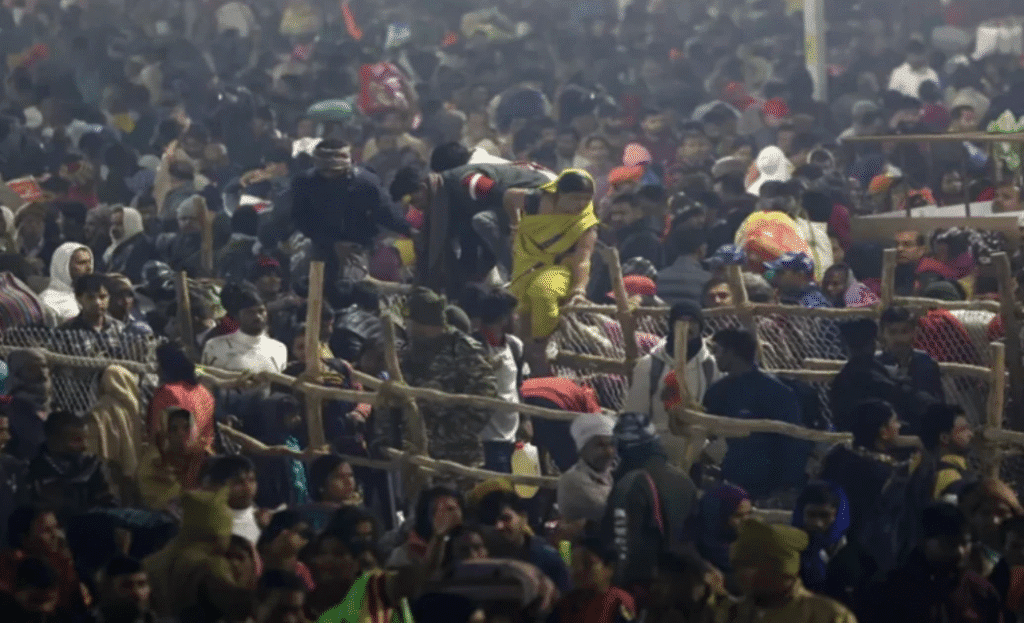
A tragic stampede during a Hindu festival near the Gundicha Temple in Puri, Odisha, claimed the lives of three devotees and left several others injured on Sunday. The incident occurred amidst the annual Rath Yatra celebrations, a revered chariot festival that draws thousands of worshippers from across India.
UNEXPECTED CHAOS
The stampede was triggered by a sudden surge in the crowd, according to Siddharth Swain, a district administrative official.
“Nine devotees experienced severe breathlessness and were rushed to the hospital. Unfortunately, three succumbed, but the others remain in stable condition,” Swain told reporters.
Local media reports indicate additional injuries among festival attendees, though exact numbers have yet to be confirmed by officials.
CHIEF MINISTER RESPONDS
Odisha Chief Minister Mohan Charan Majhi expressed deep sorrow over the loss of lives and called for an immediate investigation into the incident.
“This is a tragic and avoidable loss of life caused by the overwhelming rush of devotees. I extend my heartfelt condolences to the bereaved families,” Majhi posted on X (formerly Twitter).
The Chief Minister emphasized accountability, stating, “This negligence is unacceptable. I have directed a thorough probe into the safety lapses, and strict action will be taken against those responsible.”
A PERSISTENT PROBLEM
Crowd crushes and stampedes at religious gatherings are a recurring tragedy in India, a nation where festivals often draw massive, densely packed crowds.
- May 2025: Six people lost their lives in Goa during a fire-walking ritual that saw thousands flock to the event.
- January 2025: A deadly stampede at the Kumbh Mela in Prayagraj resulted in at least 30 fatalities, highlighting the persistent risks associated with large-scale religious gatherings.
CALLS FOR SAFETY REFORMS
The latest incident has reignited discussions on the need for improved crowd management and safety protocols during major religious festivals. Critics argue that authorities must balance reverence for cultural traditions with the imperative to safeguard lives.
As devotees mourn the loss of their fellow worshippers, calls for stringent measures to prevent such tragedies in the future are growing louder.