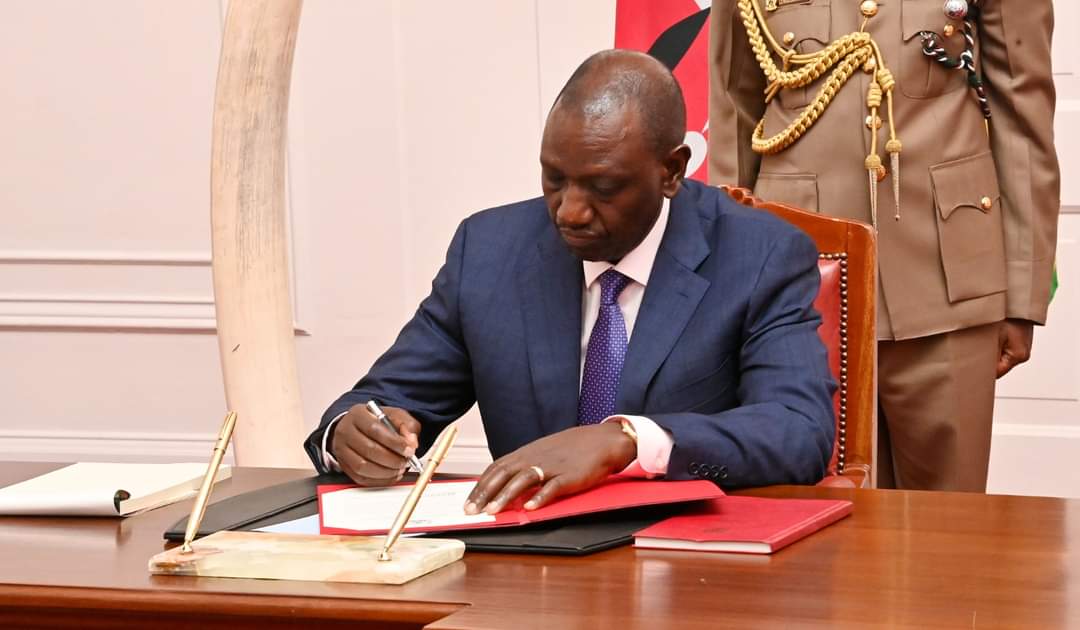
President William Ruto is set to make a landmark visit to the United States next month, his first official trip under the new Donald Trump administration, when he attends the 80th United Nations General Assembly (UNGA) in New York.
This visit comes at a defining moment for Kenya’s foreign policy, trade negotiations, and global diplomacy, as the country navigates strained U.S.–China relations and growing questions about its designation as a Major Non-NATO Ally of the United States.
WHY RUTO’S VISIT TO THE U.S. IS CRUCIAL
Kenya has become a central player in global diplomacy, carefully balancing relations between Western powers and Eastern allies. Ruto’s U.S. trip will be closely watched because it coincides with:
- A raging global trade war triggered by Trump’s aggressive tariffs and suspension of aid programs.
- The looming expiry of the African Growth and Opportunity Act (AGOA) in September 2025, which has allowed African countries, including Kenya, to export goods duty-free to the American market since 2000.
- A proposed U.S. Senate review of Kenya’s Major Non-NATO Ally status, citing Nairobi’s growing ties with China, Russia, and Iran.
These issues make Ruto’s visit not just diplomatic, but also a battle for Kenya’s economic future.
KENYA’S STATUS AS A MAJOR NON-NATO ALLY UNDER REVIEW
Kenya became the first Sub-Saharan African country to be recognized as a Major Non-NATO Ally during President Joe Biden’s administration. This designation opened access to advanced military technology, training programs, and stronger security ties with Washington.
However, U.S. Senator James Risch has called for a reassessment of this designation, citing:
- Kenya’s deepening engagement with China, including major infrastructure deals.
- Diplomatic exchanges with Russia and Iran.
- Concerns over regional security and alignment with Western policies.
The outcome of this review could reshape Kenya’s defense, intelligence, and trade cooperation with the U.S.
TRUMP’S TRADE POLICIES AND THEIR IMPACT ON AFRICA
Donald Trump’s second term has been defined by sweeping tariffs, suspension of aid, and the downsizing of USAID programs, signaling a shift away from traditional U.S.–Africa engagement.
For Kenya, the biggest concern is the end of AGOA in 2025. Without renewal or replacement, Kenya risks losing billions in export revenue, especially in the textile, apparel, and agricultural sectors.
President Ruto is expected to push for a new bilateral trade agreement with Washington to safeguard Kenya’s market access and strengthen investment opportunities.
CULTURAL DIPLOMACY: RUTO’S PUSH TO HOST THE GRAMMYS IN NAIROBI
Beyond trade and security, Ruto’s U.S. visit will also spotlight Kenya’s growing creative industry. He is scheduled to meet with the Recording Academy, organizers of the Grammy Awards, to advance Nairobi’s bid to host the first-ever African edition of the Grammys.
Kenya has already invested Ksh500 million in supporting the Recording Academy’s expansion into Africa, with plans to establish:
- World-class music studios in Nairobi.
- A Pan-African Recording Academy hub to nurture talent.
- Platforms for Kenyan and African artists to reach a global audience.
If successful, hosting the Grammys would position Nairobi as a continental entertainment hub and boost the country’s tourism and creative economy.
KENYA BETWEEN EAST AND WEST: BALANCING GLOBAL POWER RIVALRIES
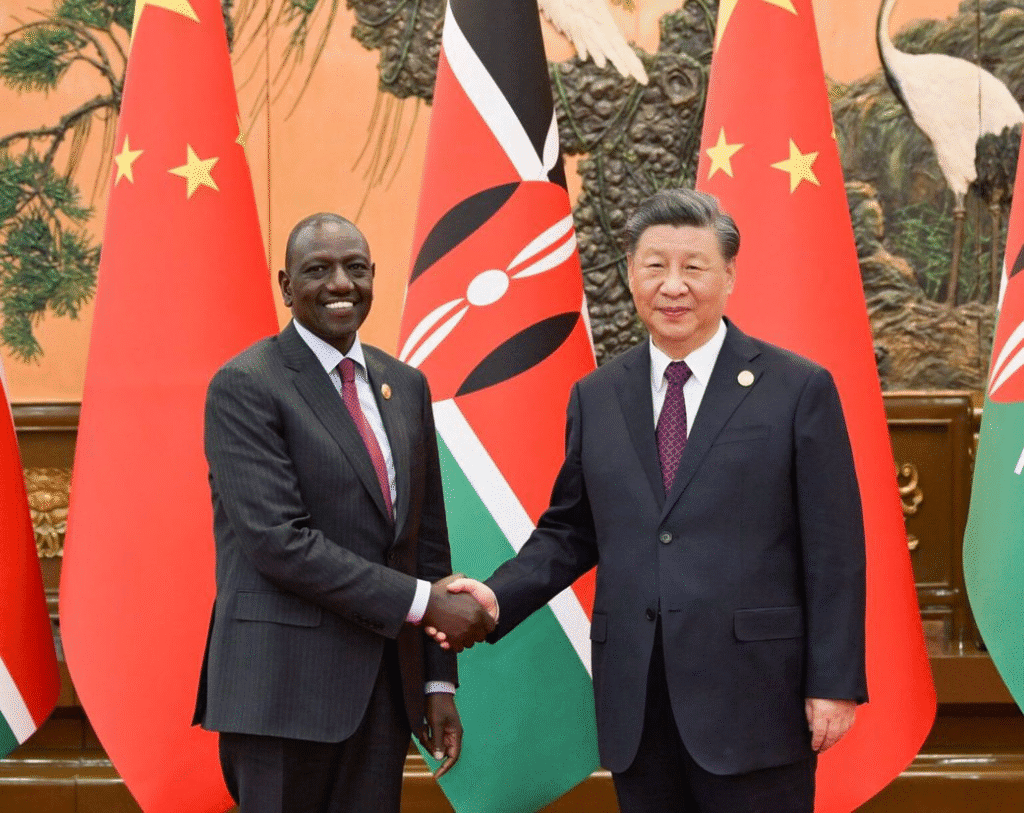
While strengthening ties with Washington, Ruto has also been deepening relations with China. Earlier in 2025, he made a four-day state visit to Beijing, where he met President Xi Jinping to discuss trade, technology, and infrastructure cooperation.
This dual engagement strategy—facing the East while embracing the West— is central to Kenya’s foreign policy. It allows Nairobi to hedge against geopolitical uncertainties, attract investment from both blocs, and assert itself as a bridge between Africa and the global economy.
WHAT TO EXPECT FROM RUTO’S U.S. TRIP
Observers believe Ruto’s U.S. visit will focus on three main priorities:
- Securing a new trade deal to replace AGOA and safeguard Kenya’s exports.
- Defending Kenya’s Major Non-NATO Ally status, ensuring continued military and economic cooperation.
- Showcasing Kenya’s creative industry by advancing Grammy Awards negotiations.
The trip could define Kenya’s role in the next phase of U.S.–Africa relations while positioning Nairobi as a key diplomatic and economic player amid the global trade war.